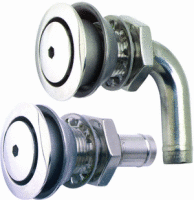
Fuel tank venting
Posted: Mon Feb 13, 2012 2:36 pm
Hello folks, boating season is right around the corner and I can hardly wait. Wanted to pick the brains of you more experienced mariners.
I have a 2006 Suntracker Party Barge with the fuel tank mounted in the transom as with most modern outboards. I want to replace the gas cap and got thinking about the vent screw on the cap that currently exists. My thought is to purchase a non-vented cap and add a thru hull vent that you would find on a below deck mounted tank. This would do two significant things. First and foremost it would eliminate the possibility of water being forced into the vent screw as the water pours over the tank while under power. I've watched the transom while at speed and I'm surprised this design has not been addressed by the boat manufacturers... the spray is serious. A bonus would be that it is no longer necessary to manually open the vent on the gas cap. I've made that exercise part of my launching ritual but have forgotten it on occasion. The plan is to add a tee at the pickup tube, extend a hose up the railing and mount the thru hull vent to some sort of bracket. Am I way off base here or does this sound like a reasonable solution for a potential water in gas problem?
I searched the internet for information but did not come up with anything. Specifically, I was trying to understand the workings of the vented gas cap. Is it some sort of check valve or is it simply opened and closed (my boat is in the barn at my property so I can't look at it)? I just can't get my head around how that could work. When I open the screw on a warm day, it vents vapor pressure out which tells me water can get in while the water rushes over the fill port. Or does it close until a low pressure builds in the tank and then opens to allow air to fill the tank and then suck water in with it? Here is the cap on my tank.
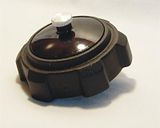
Sorry for the windy post but I'm trying to prepare for a uneventful summer if you know what I mean. It was really frustrating solving the water/fuel issues last year and want to do everything possible to prevent that in the future. Thanks to all in advance.
Mike
I have a 2006 Suntracker Party Barge with the fuel tank mounted in the transom as with most modern outboards. I want to replace the gas cap and got thinking about the vent screw on the cap that currently exists. My thought is to purchase a non-vented cap and add a thru hull vent that you would find on a below deck mounted tank. This would do two significant things. First and foremost it would eliminate the possibility of water being forced into the vent screw as the water pours over the tank while under power. I've watched the transom while at speed and I'm surprised this design has not been addressed by the boat manufacturers... the spray is serious. A bonus would be that it is no longer necessary to manually open the vent on the gas cap. I've made that exercise part of my launching ritual but have forgotten it on occasion. The plan is to add a tee at the pickup tube, extend a hose up the railing and mount the thru hull vent to some sort of bracket. Am I way off base here or does this sound like a reasonable solution for a potential water in gas problem?
I searched the internet for information but did not come up with anything. Specifically, I was trying to understand the workings of the vented gas cap. Is it some sort of check valve or is it simply opened and closed (my boat is in the barn at my property so I can't look at it)? I just can't get my head around how that could work. When I open the screw on a warm day, it vents vapor pressure out which tells me water can get in while the water rushes over the fill port. Or does it close until a low pressure builds in the tank and then opens to allow air to fill the tank and then suck water in with it? Here is the cap on my tank.

Sorry for the windy post but I'm trying to prepare for a uneventful summer if you know what I mean. It was really frustrating solving the water/fuel issues last year and want to do everything possible to prevent that in the future. Thanks to all in advance.
Mike